The Difference: Free-Floating vs. Conventional Snares.
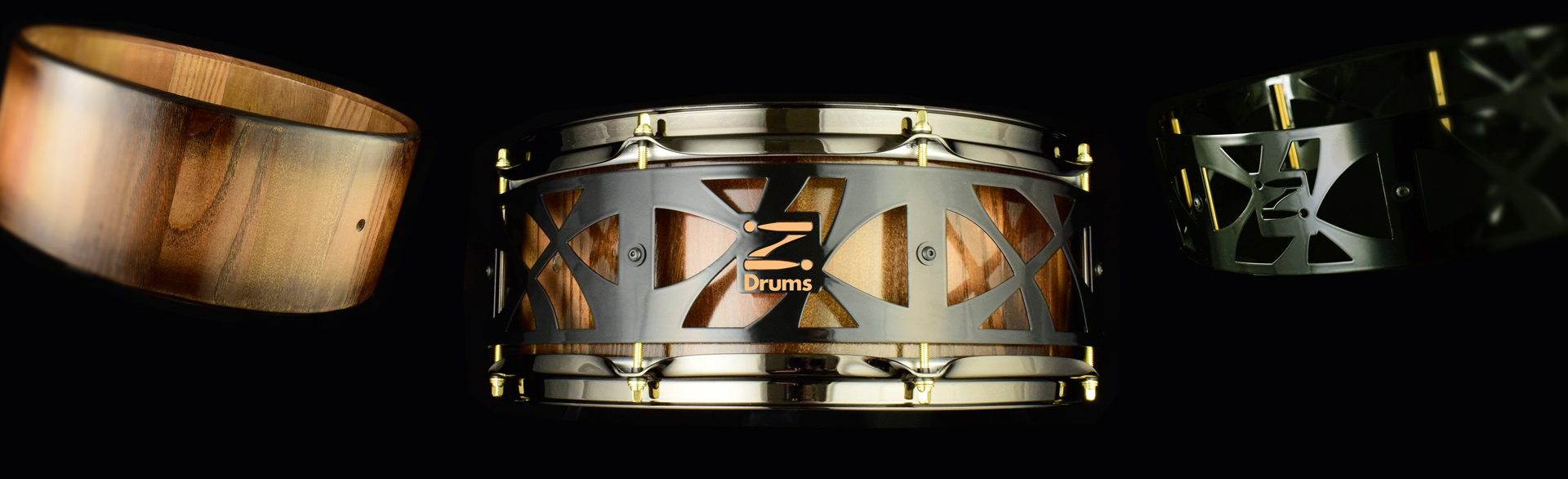
I’ve spent years chasing the perfect snare sound, and I finally found it. The ring, the shell, the snare, all working together in harmony. When I created this full free-floating snare, it wasn’t just about making it look different, it’s about making it sound different.
In a traditional snare, the tuning lugs are bolted directly to the shell, which has an interesting side effect: each tuning lug essentially creates its own set of overtones. So when you tune a conventional snare, you’re dealing with a complex mix of frequencies. each lug affecting the sound in its own way. The result? A snare drum that can sound a little muddled or difficult to dial in.
Consistancy in sound.
With a conventional snare that can have a lot of conflicting overtones, it often has a small area on the playing surface where the snare sounds the best it can be. And this area is not always in the centre of the head. With the Z Drums free-floating snare the sound is far more consistant with a “sweet spot” that covers most of the surface area.
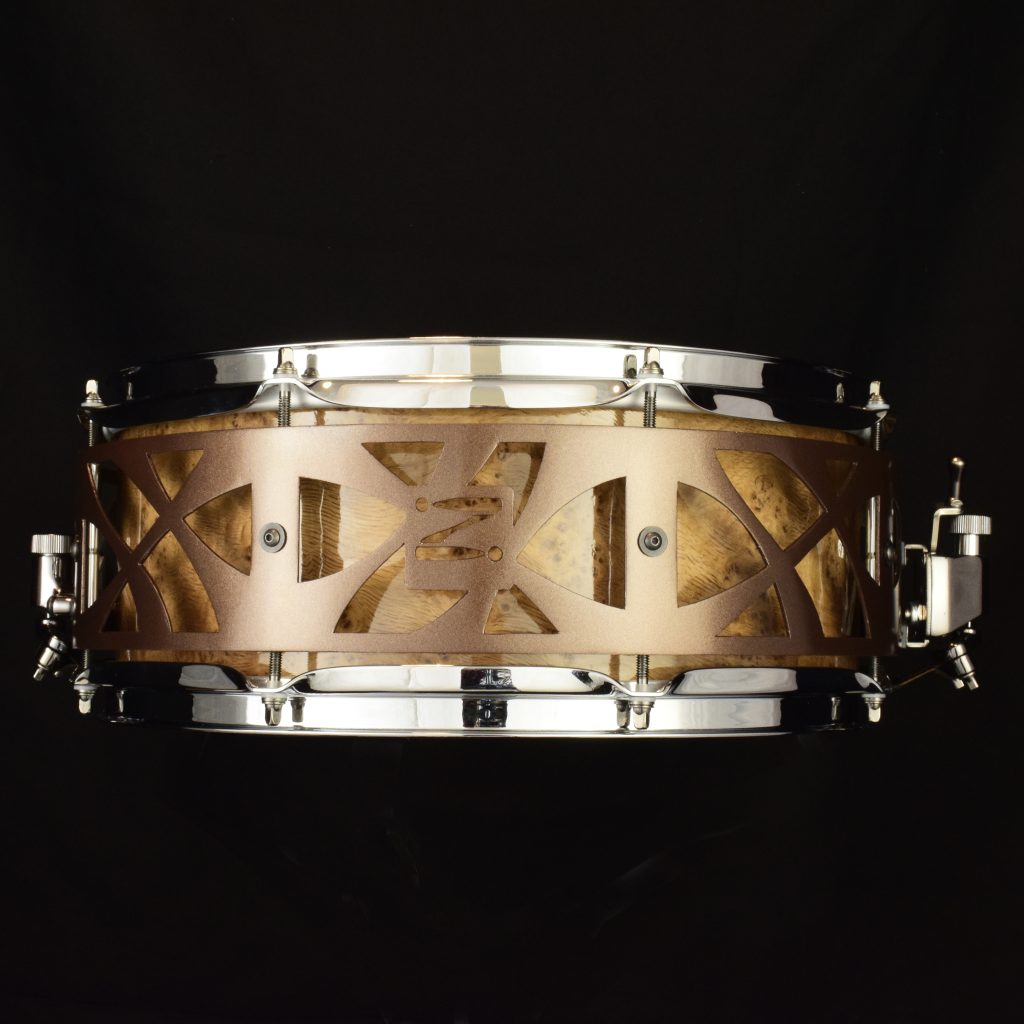
The free-floating design changes all of that.
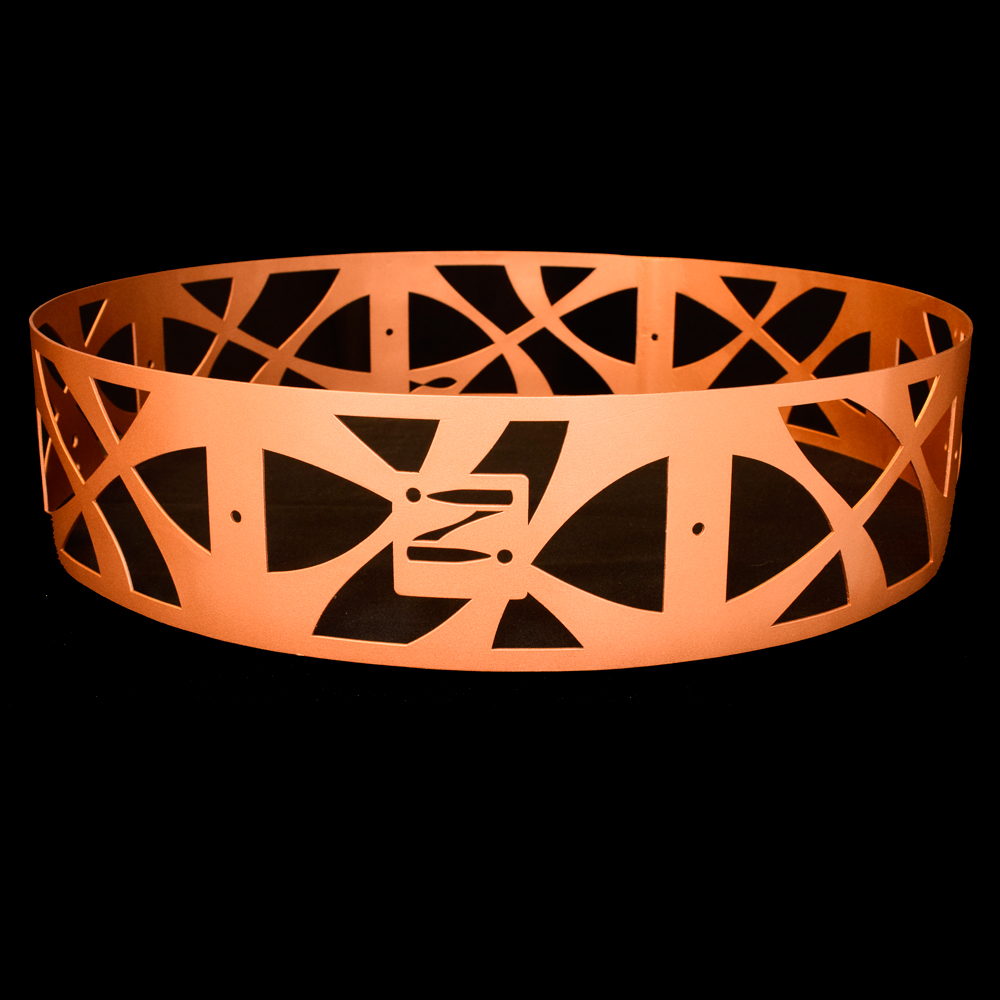
By disconnecting the tuning lugs from the shell and attaching them to a separate tube lug (that’s not physically connected to the shell), you eliminate the complex web of overtones. What you’re left with is a purer, more focused tone, almost like having just two dominant overtones, instead of a bunch of unpredictable ones. The sound is cleaner, more defined, and way easier to control.
But it’s not just about the sound. This simple design also makes tuning faster and more precise. With the lugs floating independently, you can change heads without needing to mess with the snare wires, it’s quicker, easier, and keeps everything intact while you dial in your perfect sound.
In short, the free-floating snare isn’t just a different way to build a drum; it’s a better way. Cleaner tone. Faster tuning. Less hassle.
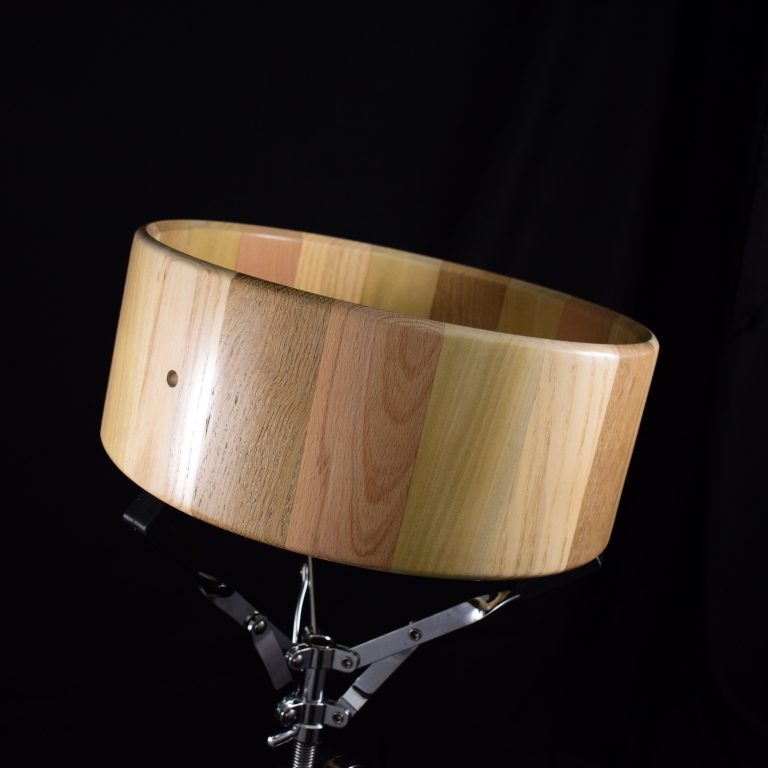
Solid wood drum-shells.
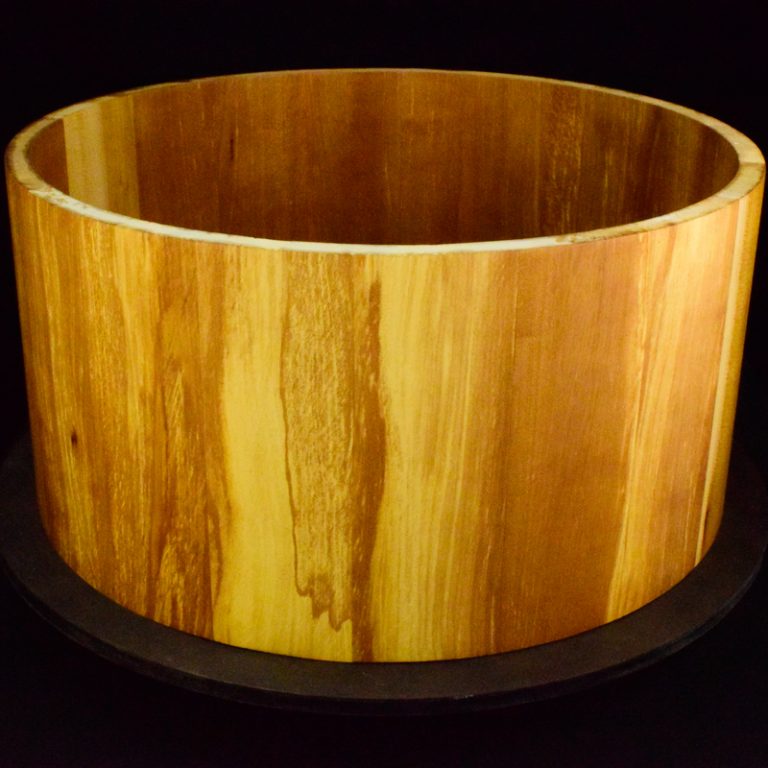
Every shell is built from sustainably sourced wood, chosen for its unique tonal character. Here’s a quick guide to help you pick the right wood for your voice.
please read next section too!
Ash:
Punchy and bright with excellent projection, great for cutting through live mixes while still delivering a balanced tone.
Red Oak:
Strong and full-bodied with a warm, deep presence and a pronounced midrange — perfect for a powerful backbeat.
Cherry:
Smooth, warm, and musical with rich low-mids and a slightly softer attack, ideal for studio work and subtle playing styles.
Maple:
The all-rounder — balanced, open, and versatile, with a slightly scooped midrange that lets both highs and lows shine.
Spalted Maple:
Tonally similar to maple but with a slightly more complex, resonant character thanks to its unique grain, and visually stunning too.
Beech:
Classic and controlled with a focused, punchy tone, strong mids, and a dry, articulate response perfect for precise playing.
Alder:
Warm and rounded with a quick decay, giving you a smooth, vintage-inspired snare sound that blends beautifully in many styles.
What really defines a snare’s sound?
Despite what I just explained about the sound quality of my free-floating snare drums with a stave shell and the difference in materials used, the sound of a snare is not determined by the wood type, the bearing edge, or even whether it is free-floating or not. If you are looking for a particular sound, you have to look at the ratio of its size, diameter, and depth. Just like your toms sound very different from each other when you have an 8-inch tom, 10, 12, 14, 16, or even 18-inch tom, the distinct difference in sound comes from the size of the shell, not from the type of wood it is made of.
The role of bearing edges and drumheads.
As for the bearing edges, the sole function of the bearing edge is to allow the heads to vibrate. And it is the heads that make the sound, not the shell. There are many possibilities for a snare drum—you can have a 14-inch, 13-inch, 12-inch, or even smaller or larger diameters. This is the main reason why one snare sounds different from another. So if you are looking for a 14-inch snare but also chasing a specific sound, you must think carefully about the depth of the shell.
Diameter vs. depth in real-world examples.
We all know that a piccolo snare has a snappy sound. But because it is still a 14-inch snare (if that’s the case), you will never get a distinctly different sound simply by changing materials or shell thickness. I have a Sonor SQ2 snare that is 12×6 inches, and a self-built piccolo that is 14×4 inches. The difference in sound between the two is huge, even though both are built to produce a snappy snare sound.
Because my fully free-floating system allows for shell changes only and uses the same hardware, I can accurately judge the difference in wood type and shell depth.
Final thoughts on choosing the right shell depth.
In conclusion, I can say that if you have a similar shell depth made from different types of wood, you will only hear a slight difference—and usually only after playing it for an extended period of time. But with shell depth, you will hear a clear difference straight away.
If you are not sure which depth would be best for you, please contact me at info@pascalzrour.com or call me on 0447 423 630 895.